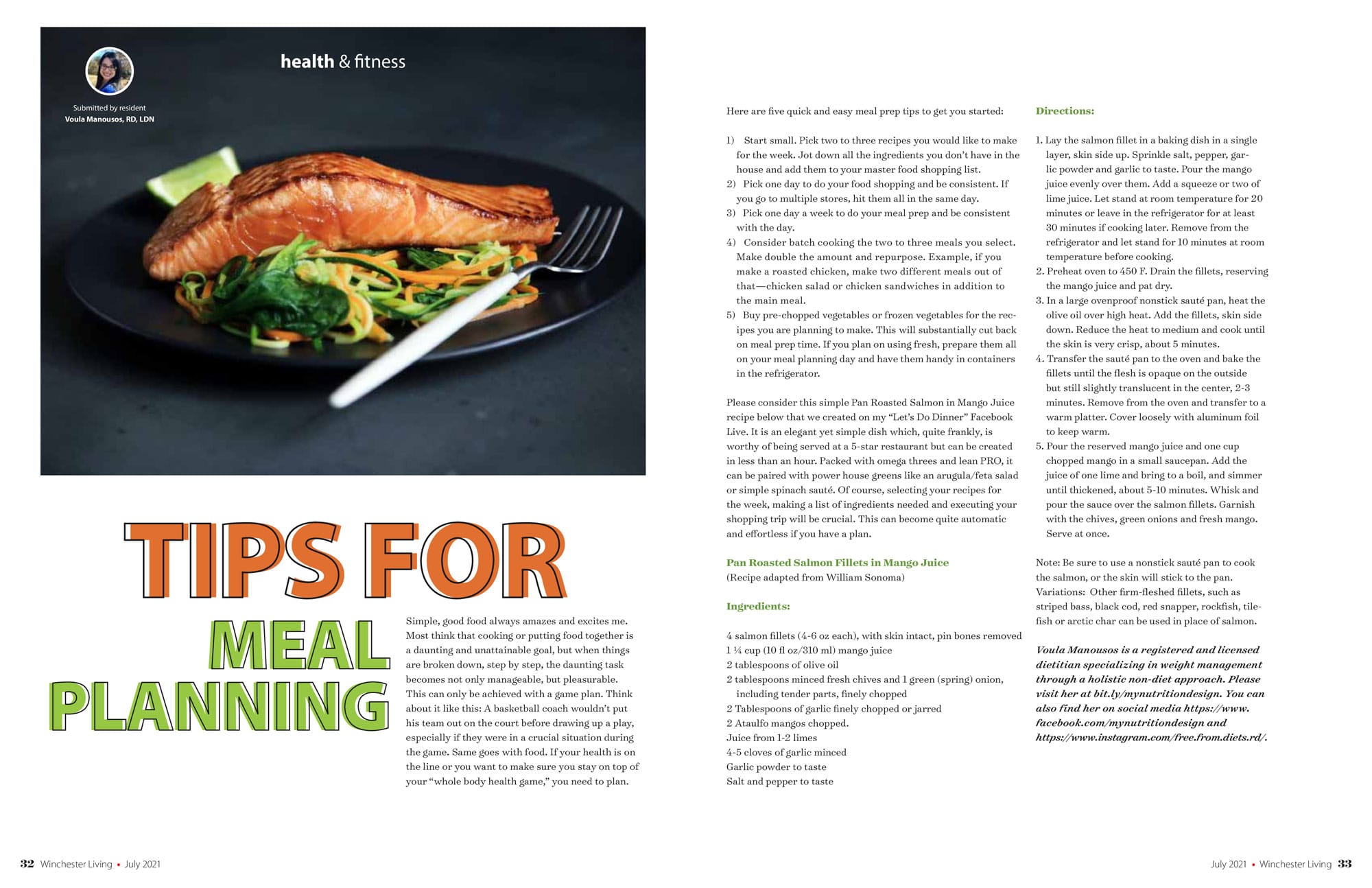
If you’ve ever wondered “what are carbs” and why they’ve been labeled as “bad” in so many diet trends, you’re not alone.
Somewhere along the way, carbohydrates became the “bad guy” in pop culture. They get blamed for weight gain, cravings, low energy, and just about everything in between.
With so much conflicting advice online, it makes sense that carbs feel confusing.
Carbs are not the enemy.
As a Registered Dietitian who’s spent years helping people create simple, sustainable eating patterns, I can promise you this, food is never the villain. Misinformation is.
Carbohydrates are deeply misunderstood, often oversimplified, and frequently demonized in trendy “wellness” conversations that ignore basic physiology.
I don’t believe in labeling foods as “good” or “bad,” and I don’t believe you need to cut out an entire nutrient group to support your health.
My approach is always balanced, science-based, food-first, and free from diet-culture fear tactics.
In this article, I’ll take the mystery out of carbs; what they are, why you need them, which types are most supportive for long-term health benefits, and how to choose them without confusion or guilt.
By the time you’re done reading, you’ll understand what carbs actually are, how they function in the body, and why they play a key role in steady energy, balanced hormones, digestion, and overall health.
My goal is simple: to give you clear, research-backed information so you can make confident choices without fear, confusion, or demonizing entire food groups.
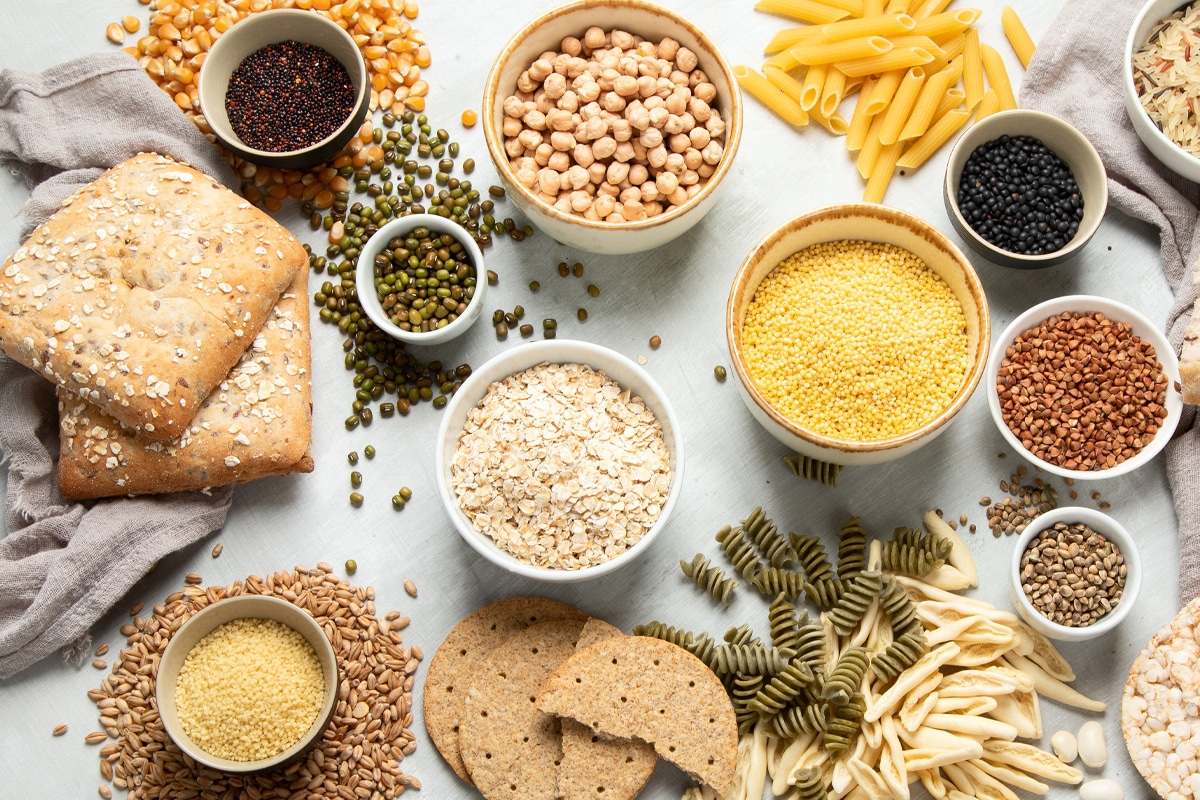
What Are Carbohydrates, Really?
Carbohydrates are just one of the three main macronutrients your body relies on every single day. They’re your primary source of fuel, especially for your brain and muscles.
When you eat carbs, your body breaks them down into glucose, which becomes immediate energy. Whatever you don’t need right away gets stored as glycogen in your liver and muscles, so you have energy available later.
Carbs also include fiber, which doesn’t break down into glucose and plays a major role in digestion, gut health, blood sugar management, and fullness. Most people aren’t eating enough fiber, and this is one reason cutting carbs too low can backfire.
Not all carbs function the same way, though. Some digest quickly, some digest slowly, and some (like fiber) don’t digest at all. That’s why the quality and source of carbs matter more than labeling foods as “good” or “bad.”
The Different Types of Carbohydrates (And Why the Distinctions Matter)
Carbs all fall under one category, but not all carbs act the same in your body. Some digest quickly, some break down slowly, and some (like fiber) don’t digest at all. Those differences matter for your energy, digestion, and overall health.
Simple Carbohydrates
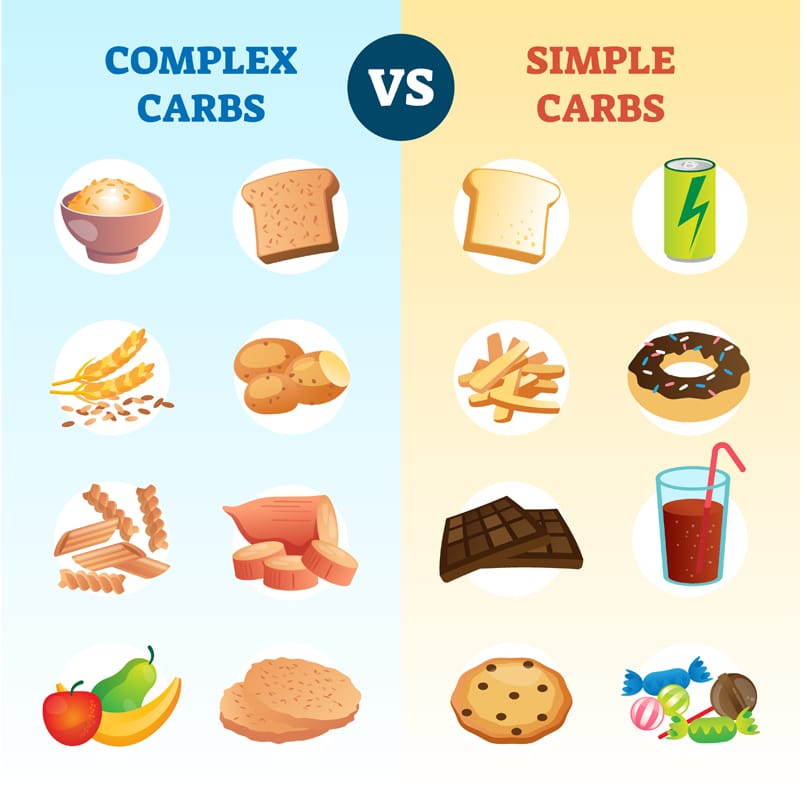
Simple carbohydrates are carbohydrates made of one or two sugar molecules. They digest fast and give you fast energy.
You’ll find natural simple carbs in foods like fruit, milk, and yogurt. These foods also come with vitamins, minerals, antioxidants, and fiber, which means they offer far more than just sugar.
You’ll also find simple carbs in processed foods with added corn syrup like candy, soda, baked goods, and sweetened cereals. These forms break down very fast and don’t offer much nutrition on their own.
But here’s the key: not all simple carbs are “bad.” Your body doesn’t see fruit the same way it sees soda. And quick-digesting carbs can actually be helpful in certain situations, like before a workout, right after exercise, or anytime you need fast, reliable energy.
Complex Carbohydrates
Complex carbohydrates have longer, more structured chains of sugar molecules. Because of this structure, they digest more slowly and provide steadier, more sustained energy.
You’ll find complex carbs in whole grains, beans and legumes, potatoes, corn, and most vegetables.
These foods are foundational in many healthy eating patterns because they contain fiber, vitamins, minerals, and phytonutrients that support digestion, heart health, hormone balance, and blood sugar stability.
Complex carbs are often the foods that help you stay full longer and avoid a mid-afternoon crash.
Fiber: The Unsung Hero
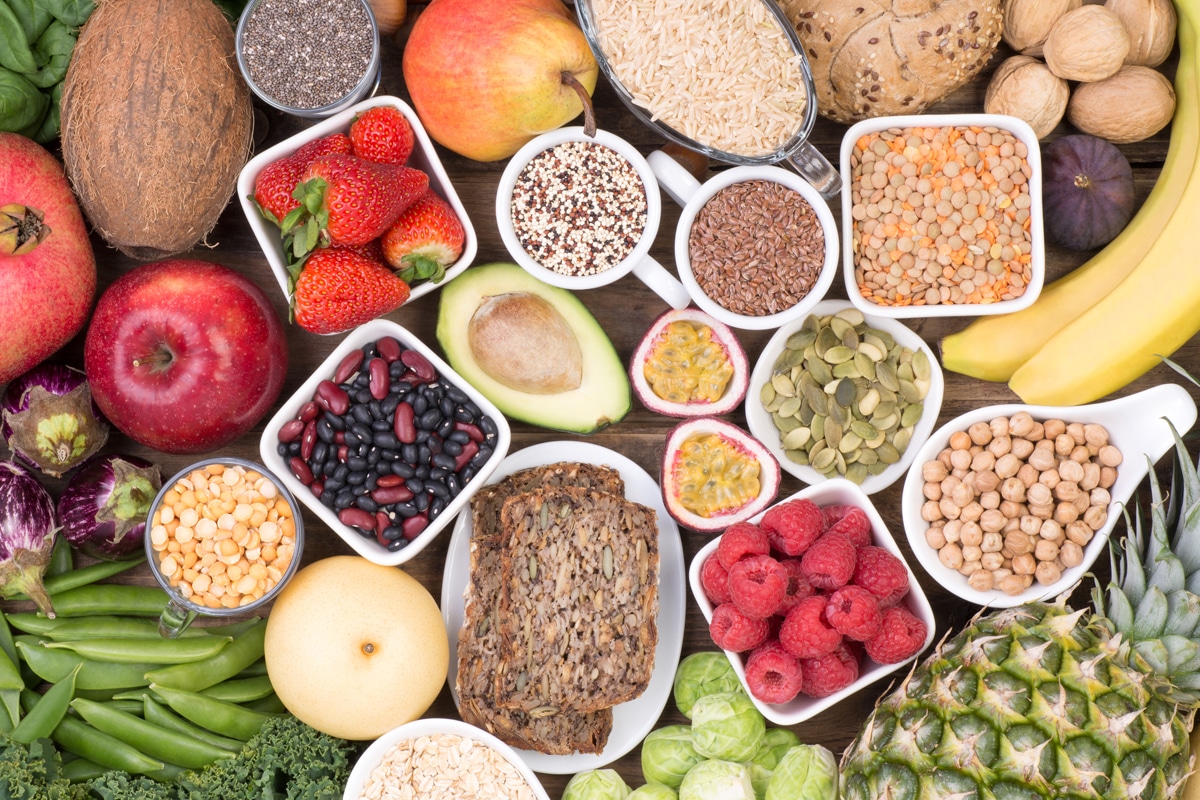
Fiber is technically a carbohydrate, but it doesn’t break down into glucose the way other carbs do. We digest fiber differently, depending on the type of fiber it is.
Soluble fiber helps slow digestion, supports stable blood sugar, and keeps you feeling fuller for longer.
Insoluble fiber helps keep your digestion regular and supports gut health.
Most people fall short on dietary fiber, especially when following restrictive diets. That’s one reason a low-carbohydrate diet can cause constipation, cravings, or low energy.
Fiber doesn’t add calories the same way other carbs do, but it adds a tremendous amount of nutritional value.
Resistant Starch
Resistant starch is another type of carb your body doesn’t fully break down.
It acts more like fiber and reaches your colon intact, where it feeds healthy gut bacteria. This can support digestion, satiety, and better blood sugar balance.
You’ll find resistant starch in foods like cooled potatoes, green bananas, lentils, beans, and oats.
Even small amounts can make meals more satisfying and supportive for gut health.
What Are Net Carbs? (And Do They Matter?)
“Net carbs” is a term that refers to the carbohydrates in food that your body can actually digest and use for energy. You’ll often see it calculated on the nutrition facts label.
The idea became popular through low-carb and keto (ketogenic diets). Since fiber isn’t digested the same way other carbs are, subtracting fiber gives you the number of carbohydrates that may more directly impact blood sugar.
Total carbohydrates − fiber = net carbs
Net carbs can be useful in very specific situations, particularly for people with diabetes who use insulin and need to understand how different foods affect their blood glucose levels. In that context, it can be an appropriate and helpful tool.
For the average person, net carbs can easily become another unnecessary “food rule.” It can make eating feel overly complicated and lead to micromanaging numbers instead of focusing on the bigger picture.
My approach is simple: prioritize whole foods, build balanced meals, and include carbs that make you feel nourished and energized.
Most people don’t need carb math to support their health goals.

So… What Foods Are Considered Carbs?
Carbs show up in more foods than most people realize. Some are naturally full of carbohydrates, while others are more processed and concentrated.
Understanding the difference can help you make choices that feel aligned with your health goals without labeling foods as “off limits.”
Fruits, Starchy Vegetables, and Other Foods Naturally High in Carbs
These foods provide carbohydrates along with vitamins, minerals, fiber, antioxidants, and other nutrients your body needs.
Fruits.
All fruit contains natural sugars, but it also comes with fiber, water, and phytonutrients. That combination helps support energy, digestion, and fullness.
Potatoes and other starchy vegetables.
Sweet potatoes, corn, peas, and winter squash provide fiber, potassium, and long-lasting energy.
Beans and legumes.
Lentils, chickpeas, black beans, and kidney beans are rich in carbs and plant-based protein, making them incredibly satisfying.
Dairy Products.
Milk and yogurt contain lactose, which is a naturally occurring carbohydrate, along with protein and calcium.
Whole grains.
Foods like brown rice, oats, quinoa, farro, and whole-wheat bread offer complex carbs that digest more slowly and keep blood sugar steadier.
These foods are nutrient-dense and supportive for most people.

Foods Loaded With Added Sugars and Processed Carbs
These processed foods contain carbs but offer less fiber and fewer nutrients. They can lead to faster spikes in blood sugar and hunger returning sooner.
Pastries, donuts, and cakes.
These sugary foods are mostly refined flour, corn syrup and added sugar.
White bread.
The bleaching process strips out the fiber that helps with fullness and blood sugar control.
Candy, soda, and sugar-sweetened beverages.
These are concentrated sources of simple sugar without fiber or nutrients to slow absorption.
Sweetened cereals.
Often marketed as healthy but usually high in added sugar, not to mention the table sugar sprinkled on top.
Chips and crackers.
Easy to overeat and often paired with added oils and salt.
According to the CDC, consuming too many added sugars can contribute to weight gain, type 2 diabetes and heart disease.
This is where portions and context matter. A bakery treat on a holiday morning? Totally fine. Daily breakfast? Maybe not as supportive.
No single food (or single choice) makes or breaks your health. What matters most is your overall pattern of eating and how food fits into your lifestyle, traditions, and preferences.
Since we’re heading into the holidays, this is usually the point where people start worrying about carbs. If that sounds familiar, my holiday eating guide walks you through how to enjoy the season without falling into the “all-or-nothing” mindset.

No-Carb Foods & Low-Carb Veggies
Some foods naturally contain little to no carbohydrates. Others are lower in carbs compared to starchy vegetables or grains.
These foods can be helpful additions to a balanced diet, offer variety, and support steady energy but they aren’t inherently “better” or “healthier” than higher-carb foods.
And just to be clear: if you’re managing diabetes or prediabetes, you still need carbohydrates.
The goal is to distribute them in a way that supports blood sugar, not eliminate them. Carbs aren’t the problem. It’s usually the pattern, timing, or portion that needs adjusting.
No-Carb Foods
These foods contain protein or fat but essentially no carbohydrates.
- Eggs
- Fish and seafood
- Poultry
- Beef and other meats
- Tofu and tempeh
- Nuts and seeds
- Olive oil, avocado oil, and other fats
These foods are useful when building balanced meals that already include higher-carb ingredients.
Adding protein or healthy fats can help slow digestion and support more stable blood sugar levels without removing carbs completely.
Low-Carb Vegetables
Unlike starchy vegetables, these veggies contain fewer carbohydrates while still offering fiber, vitamins, minerals, and antioxidants.
- Leafy greens
- Bell peppers
- Cucumbers
- Zucchini
- Broccoli
- Cauliflower
- Mushrooms
Low-carb vegetables are great for adding volume and color to meals, especially if you’re trying to feel fuller without relying only on starches or proteins.
Again, low-carb doesn’t mean “better.”
Higher-carb vegetables like sweet potatoes, peas, carrots, and corn are also rich in nutrients and can absolutely fit into a healthy eating pattern.
This is simply one category of foods you can use to build meals that match your needs, your health goals, and your personal preferences.
What Carbs Are Good for You?
When people ask, “What carbs are good for me?”, they’re usually trying to sort foods into two buckets: the “allowed” ones and the “bad” ones. But that kind of thinking isn’t helpful, and it isn’t accurate.
There’s no such thing as good carbs or bad carbs. There are just foods that offer more nutrition, more fiber, and more staying power.
Nutrient-Dense, High-Fiber, Minimally Processed Carbs
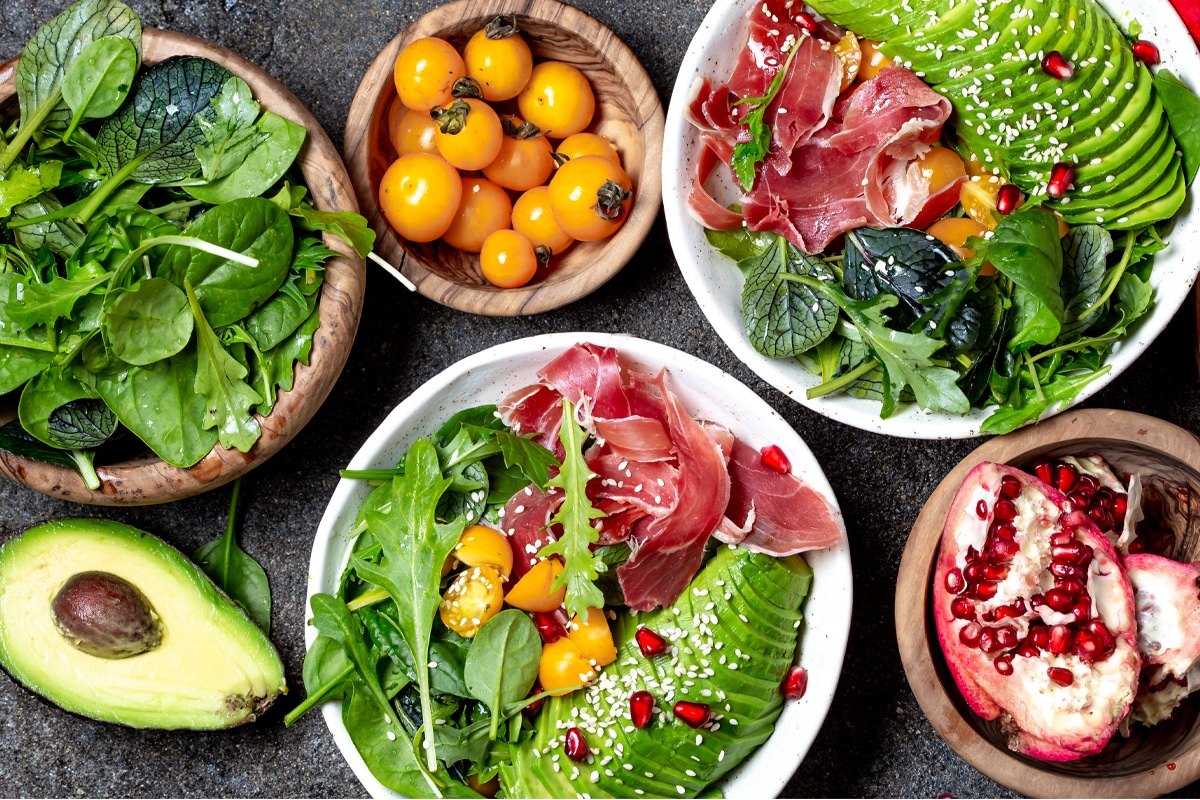
These foods support your health because they’re packaged with everything your body needs to feel nourished: fiber, vitamins, minerals, phytonutrients, and slow-release energy.
Whole fruit.
Fruit contains natural sugar, but it also brings fiber, water, antioxidants, and micronutrients that support immunity, healthy digestion, and energy.
Whole grains.
Brown rice, oats, quinoa, barley, and whole-grain bread digest more slowly thanks to their fiber content. That leads to steadier energy and better blood sugar support.
Beans and legumes.
Lentils, black beans, chickpeas, and kidney beans offer complex carbs, plant-based protein, fiber, and minerals like iron and magnesium. They’re incredibly satisfying.
Starchy vegetables.
Sweet potatoes, squash, potatoes, and corn are carbohydrate-rich but also provide fiber, potassium, and long-lasting energy.
High-fiber cereals and whole-grain breakfast options.
When you choose options with real fiber (not added fillers), you get better digestion, better satiety, and more predictable energy through the morning.

“Bad” Carbs? Not Exactly, But Some Are Less Helpful
As a dietitian and coach, my clients often ask, “Are there bad carbs?” The answer isn’t as black-and-white as diet culture makes it seem.
Some foods simply digest very quickly, which means they raise your blood sugar fast and leave you hungry again soon after. That doesn’t make them evil, it just means they’re not as satisfying or nourishing as other options.
Highly processed carbohydrates fall into this category.
They tend to be low in fiber and high in added sugars, so your body burns through them quickly. Hunger returns fast, cravings creep in, and they don’t offer much besides short-term energy.
Examples include:
- White sugar
- Soda and sugar-sweetened fruit drinks
- Candy
- Ultra-processed pastries and baked goods
But here’s the key: these foods still have a place in real life.
We live in a world with celebrations, birthdays, holidays, and occasions where a treat simply sounds good. It’s okay to enjoy them, they just shouldn’t be doing the heavy lifting of filling you up or meeting your nutrient needs.
I often explain it to clients like this:
Your whole grains, beans, fruits, and vegetables are your “pay the mortgage” foods. They cover your essentials.
Your sweets and treats are your “fun money”. They are the extras you enjoy, but not where you invest most of your resources.
The only time these foods can become a concern is when they’re used to numb emotions or to fill a void instead of hunger.
If you find yourself reaching for quick sugar when you’re stressed, sad, bored, or overwhelmed, that’s a completely human response, but it signals a different kind of support is needed.
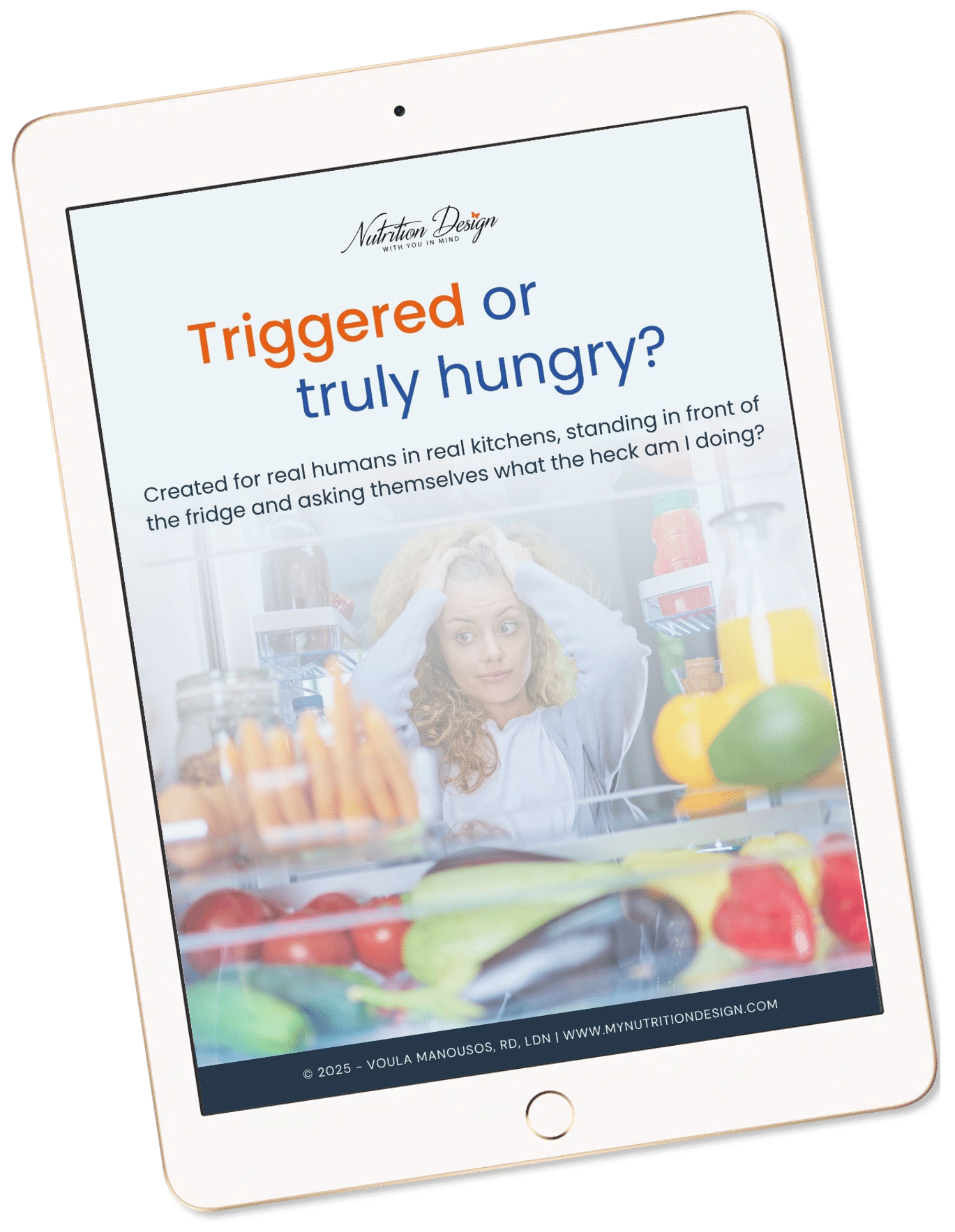
If emotional eating or “trigger eating” feels familiar, I have a free resource that helps you understand the pattern and start breaking it gently.
FREE PDF DOWNLOAD
If sugar cravings tend to hit hard, read my post on that topic for more support.
What Are Carbohydrates Good For? Why Your Body Loves Them
Carbs do far more than give you quick energy. They play a role in nearly every major system in your body.
When people finally understand how essential carbohydrates really are, they often feel a huge sense of relief because the foods they’ve been told to avoid are often the ones their bodies have been asking for.
Energy & Blood Sugar Stability
Carbs are your body’s primary energy source. Your muscles run on the conversion of carbohydrates into usable fuel, and that includes your most important muscle, your heart.
While fat and protein serve other important roles, they don’t convert to glucose efficiently. That means they can’t replace the quick, reliable energy that carbohydrates provide.
When you include carbs at meals and snacks, you help stabilize blood sugar, avoid energy crashes, and prevent that mid-afternoon foggy feeling.
Hormone Support
Carbs play a direct role in supporting hormones like cortisol and serotonin, which influence stress levels, sleep quality, and overall mood.
Eating balanced meals that include carbohydrates can help keep these hormones more regulated throughout the day.
Gut Health
Fiber (a type of carbohydrate) is one of the best things you can offer your gut.
It feeds your microbiome, supports regular digestion, and helps keep you fuller longer. Most people under-eat fiber, which is another reason eliminating carbs can lead to constipation, bloating, or inconsistent digestion.
Brain & Mood Support
Your brain prefers glucose as its fuel source. When you go too long without eating, or when meals are too low in carbohydrates, irritability, fogginess, or low mood can show up.
Low or no food at all can cause these issues too, but carbohydrates raise blood sugar faster than other macronutrients. That’s why including a carb with meals or snacks helps boost energy and stabilize mood more predictably.

Athletic Performance
Your muscles store carbohydrates as glycogen, which is what allows them to perform, recover, and repeat movement.
No athlete is doing anything: running, lifting, sprinting, or even walking up a flight of stairs with energy without carbs. High-quality carbohydrates are non-negotiable for performance.
Fullness & Satisfaction
Meals that include carbs tend to feel more complete, which leads to fewer cravings and less overeating later.
If you don’t eat carbs on the front end, you’re far more likely to crave them on the back end, usually in the form of quick sugar like cookies, cakes, candy, or pastries.
A balanced plate prevents that rebound.
If fullness and volume-based eating interests you, check out my post on the Volumetrics diet, which uses high-fiber, high-water foods to keep you satisfied.
How to Choose Carbs That Fit Your Goals
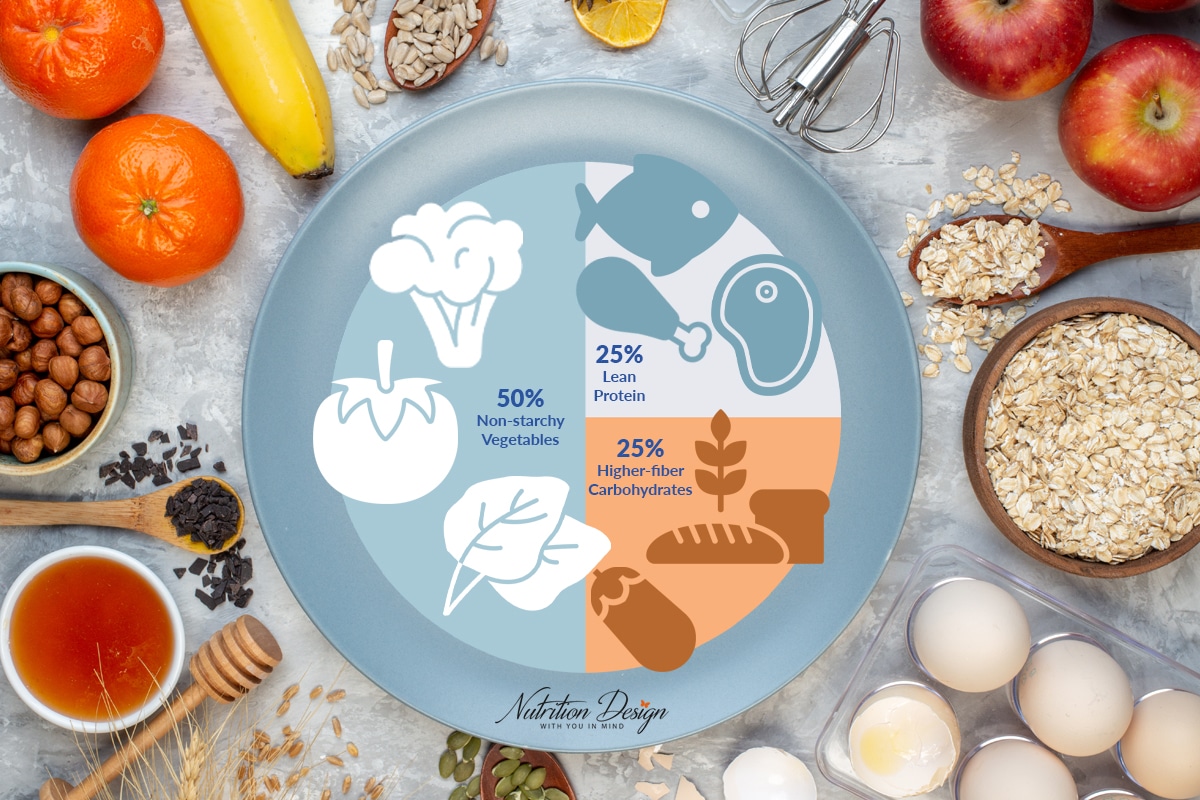
You don’t need a strict meal plan or carb-counting app to eat in a way that supports your health. A simple framework can help you build meals that feel good, keep you full, and still leave room for the foods you enjoy.
The “Build a Balanced Plate” Method
Think of your meals as a team effort instead of one nutrient carrying all the weight.
Start with a carbohydrate source.
This could be fruit, beans, lentils, potatoes, rice, pasta, or bread. Aim to make your carb choice fiber-rich (whole grains, beans, starchy veggies, fruit) at least half the time to support steady energy and digestion.
Add a protein.
Fish, poultry, eggs, dairy products, tofu, tempeh, or beans help with fullness, muscle health, and blood sugar balance.
Add a fat.
Avocado, nuts, seeds, olive oil, or cheese help keep meals satisfying and slow digestion.
Add color.
Vegetables and/or fruit add fiber, vitamins, minerals, and volume to your plate.
Within this framework, you’re choosing carbs and pairing them with protein, fat, and color so they work for you without getting bored with your meals.
When Higher-Carb Options Make Sense
High carbohydrate foods often take the blame for weight gain and sluggishness, but there are many situations where they’re exactly what your body needs.
They can be especially helpful when:
- You’re more active that day.
- You have a long workday or you’re on your feet a lot.
- You’re exercising, training, or recovering from a workout.
- You’ve gone longer between meals and need reliable energy.
In these cases, starchy carbohydrates like rice, potatoes, pasta, beans, or whole-grain bread can be the difference between dragging and actually feeling fueled because they offer the energy you might need. Pairing them with a protein or fat would also offer more “staying power” in these situations as well.
When Lower-Carb Options Fit Better
Lower-carb choices can be useful sometimes, but not because they’re “better.”
They may fit well when:
- You already have a carb-heavy component in the meal (like pasta) and want to balance with more veggies and protein.
- You’re less active that day and simply feel better with a lighter carb load.
- You want to increase volume with vegetables while keeping the overall meal more moderate in carbs.
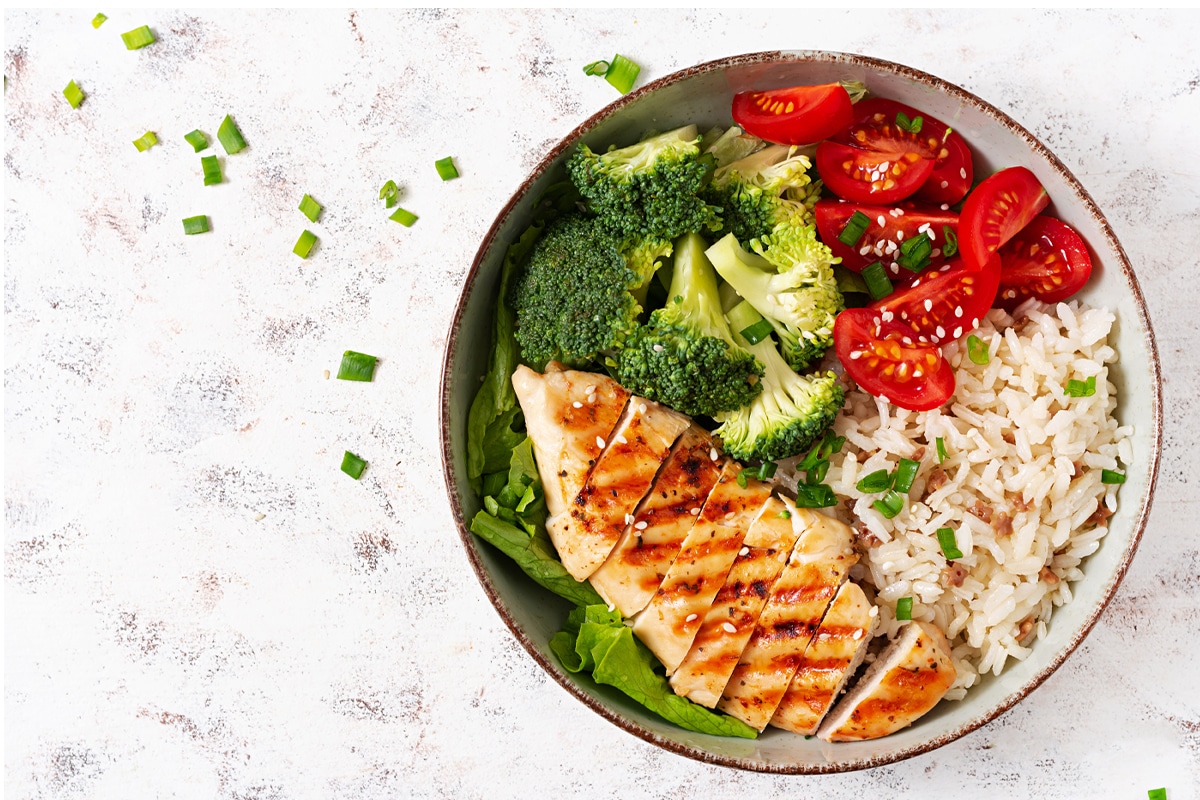
This might look like pairing a smaller scoop of rice with extra veggies and chicken, or serving pasta with a big salad and some added protein.
Portion Size Without Diet Culture
You don’t need a food scale or to stress about how many carbohydrates are in your meal to get a sense of what’s on your plate. Your hand is an easy built-in guide.
Your palm is roughly a 3-ounce portion of protein.
Your thumb is close to a tablespoon of fats like nut butter, mayo, or oil.
Your cupped hand can stand in for a serving of carbs, like rice, pasta, or beans.
Your whole hand can guide a serving of leafy greens or other veggies.
In my practice, I often pair this with a plate visual to help people see balance at a glance. Remember: it’s a starting point, not a rulebook.
From there, let your hunger and fullness cues help you fine-tune.
If you’re consistently hungry soon after meals, you may need more food, often more protein or fat. If you feel sluggish and overly full, you might need a bit less, or a different type.
When choosing carbs, think fiber-forward rather than “low-carb.” Whole grains, beans, lentils, starchy veggies, and fruit offer more staying power than ultra-processed options.
Don’t skip carbs entirely. When you cut them out on the front end, rebound eating almost always shows up later in the form of intense sugar cravings, late-night snacking, or feeling “out of control” around sweets. That’s your body asking for the fuel it was missing.

Frequently Asked Questions About Carbs
Are potatoes high in carbohydrates?
Yes. Potatoes are higher in carbohydrates, just like rice, bread, and pasta. They’re naturally more starchy and less fibrous. Higher-fiber carbs tend to support blood sugar control, satiety, and weight management, but potatoes can absolutely fit into a healthy eating pattern. Try eating them with the skin for an extra fiber boost!
They’re nourishing. Just pair them with protein, fat, and some color for balance.
Are fruits carbs?
Yes. Fruit contains natural sugars, which makes it a carbohydrate source. But it also comes with fiber, water, vitamins, minerals, and antioxidants, which support digestion, fullness, and overall health.
Fruit is not something to steer clear of. Fruit is one of the most nutrient-dense carb sources you can choose.
Are beans carbs or protein?
Both. Beans and legumes contain complex carbohydrates and plant-based protein, along with fiber and minerals. That’s why they’re so filling and supportive for digestion and blood sugar.
Are carbs bad for weight loss?
No. Carbs are not the problem. Overeating anything can lead to weight gain. If you ate large portions of meat, cheese, or nuts, you’d gain weight too.
Portion and type matter. Refined foods (white bread, pastries) digest quickly and don’t keep you full. Whole-grain carbs and starchy veggies contain more fiber, which helps with fullness and more stable hunger signals.
Carbs can absolutely be part of weight loss or weight maintenance when they’re part of a balanced plate.
Is low-carb healthier?
No, not across the board. Low-carb diets work for some people, but they’re not “better” for everyone. Many people feel tired, irritable, foggy, or overly hungry when carbs are too low.
Your body depends on carbohydrates for energy, brain function, hormone balance, gut health, and mood regulation.
Instead of going low-carb, the goal is to choose high-quality carbs and pair them well with protein, fat, and fiber.

When Carbs Feel Confusing (You’re Not Alone)
If carbs feel confusing, it’s not your fault. Most of the mixed messages come from the media, wellness trends, or marketing that oversimplifies nutrition.
Take something like Gatorade.
For a competitive athlete who’s sweating, burning through glycogen, and losing sodium and potassium, that drink can be incredibly helpful. They need the sugar for fast energy and the electrolytes for performance and hydration.
But for the average person who’s sitting at a desk or relaxing on the couch, that same drink is more likely to contribute to unwanted weight gain, blood sugar spikes, or even higher blood pressure if they’re sensitive to sodium.
Same product. Different needs. Different outcomes.
This is exactly where nutrition gets misunderstood. Most of the misinformation online doesn’t account for these differences, which leads people to fear foods that are actually helpful or to rely on foods that don’t serve their energy or health.
That’s why nutrition can’t be one-size-fits-all. The right amount and right types of carbs depend on your body, your health, your lifestyle, and your goals.
Are you an athlete? A person with diabetes or prediabetes? A growing teen? A busy parent? A new mom? An older adult with changing energy needs?
Every one of these situations calls for a different approach.
When you understand what your body actually needs, carbs stop being scary and start becoming foods you can use with confidence.
If you’re feeling overwhelmed or unsure about where you fit, this is exactly the kind of thing I help clients sort through. My coaching emphasizes personalized eating patterns, not diet rules, not elimination, and definitely not fear.
Carbs can fit beautifully into a healthy lifestyle. If you want clarity tailored to you, you can get in touch with me and we’ll talk through your goals together.

Carbs Aren’t the Villain. They’re Part of the Team
Carbs don’t deserve the reputation they’ve been given. They’re not something to avoid, and they’re not standing in the way of your health. When you understand what they do in the body, from steady energy to digestion to hormone and mood support, it becomes clear that carbohydrates play an essential role in feeling your best.
The real key is learning which carbs support your goals, how they fit into balanced meals, and how to choose options that keep you full and satisfied.
There’s no perfect number, no universal rule, and no one-size-fits-all approach. What matters is the pattern of eating that makes sense for your life, your health, and your preferences.

That’s exactly what I help my clients with every day. We work together to create a clear, personalized approach to eating that supports your energy, digestion, blood sugar, and long-term health without restriction or rigid rules.
If you’re ready for clarity and a plan that actually fits your life, get in touch and let’s talk through your goals together.