Stress eating is common, especially when you’re balancing work, raising children, managing school schedules and activities, caregiving for aging parents, supporting adult children, navigating retirement decisions, or handling the everyday pressures of life.
When food acts like a stress-reliever rather than a response to physical hunger, that’s “stress eating”. It’s a form of stress-related eating that can show up as reaching for sugary foods after a tense conversation, grazing while worrying about finances, or eating to take the edge off.
It’s also important to understand how stress eating differs from emotional eating and binge eating. While they can overlap, they are not the same and understanding your eating behavior is the first step toward change.
In this article, you’ll learn how to recognize stress eating, how it affects food intake and eating patterns, and practical ways to avoid stress eating without strict dieting.
As a Registered Dietitian I focus on realistic, evidence-based strategies that support both mental health and long-term well-being, not quick fixes or guilt-driven plans.

What is Stress Eating?
Stress eating is a pattern of eating in response to stress rather than physical hunger. It’s a type of stress-related eating where food becomes a coping tool that temporarily eases tension, distracts from uncomfortable emotions, or provides relief after a long day.
For some people, stress eating shows up during busy seasons of life like managing young children, juggling school drop-offs and activities, or balancing work deadlines.
For others, it may happen in high-pressure careers, during financial strain, health concerns, relationship challenges, or caregiving responsibilities. Even positive life events like planning a wedding, moving, starting a new job can increase stress levels and influence food intake.
Over time, stress eating can become automatic.
If grabbing a snack consistently provides short-term comfort, your brain begins to associate food with relief. The behavior becomes less about hunger and more about habit. What starts as an occasional response to a difficult day can turn into a predictable eating pattern.
Physiologically, there’s also a reason this happens.
During periods of chronic stress, the body releases cortisol, a hormone that helps regulate your stress response. Cortisol is essential for survival, but when stress is ongoing, elevated cortisol levels can influence appetite, increase cravings for higher-fat or sugary foods, and affect overall food intake.
Research suggests that chronic stress and cortisol may play a role in changes in eating behavior and, over time, weight gain. Read more about this connection in my blog on stress and weight gain.
Understanding this distinction is key: physical hunger builds gradually, comes with physical cues like stomach growling or low energy, and can be satisfied with a variety of foods.
Stress-driven eating often feels more urgent, specific (for example, craving something sweet or crunchy), and tied to emotional tension rather than physical need.
Recognizing stress eating is step one. When you understand why it happens, you’re better equipped to respond in ways that support your long-term health.
Stress Eating vs. Emotional Eating vs. Binge Eating
These terms are often used interchangeably, but they are not the same. Understanding the differences can help you make sense of your own eating behavior and determine whether you’re dealing with a habit pattern, a coping strategy, or something that may require additional support.

Emotional Eating
Emotional eating is eating in response to emotions rather than physical hunger. While stress can certainly trigger emotional eating, emotional eaters are not always feeling stressed. Food may be used to cope with boredom, loneliness, frustration, disappointment, or even positive emotions like celebration and reward.
For example, you might reach for something sweet after a difficult conversation. Or you might snack out of habit while watching television because it feels comforting.
Emotional eating can also show up as “bored eating” when you eat because there’s nothing else engaging your attention.
In many cases, emotional eating develops gradually.
Over time, your brain begins to associate certain foods with relief, distraction, or pleasure. That doesn’t mean there’s something wrong with you. It means your eating patterns have adapted to help you cope. The key difference is that emotional eating is driven by feelings, not physical hunger cues.
Binge Eating
Binge eating is different from both stress eating and emotional eating. Clinically, binge eating involves consuming a large amount of food within a discrete period of time while feeling a loss of control over eating.
According to the National Institute of Diabetes and Digestive and Kidney Diseases (NIDDK), binge eating disorder is characterized by recurring episodes of eating large quantities of food, often quickly and to the point of discomfort, accompanied by feelings of shame, distress, or guilt afterward.
Binge eating disorder is a diagnosable mental health condition and falls under the umbrella of eating disorders.
It is not simply “overeating,” and it is not a lack of willpower. It typically requires support from a licensed mental health professional, such as a psychologist or psychiatrist, and sometimes a multidisciplinary team that may include a registered dietitian like myself.
If episodes of eating feel frequent, secretive, overwhelming, or out of control or if food feels like it’s dominating your thoughts, that is a sign to seek professional help.
Treatment for eating disorders is specialized and deserves appropriate care.
As a registered dietitian, I can support clients in understanding eating habits and improving their relationship with food. However, when binge eating disorder or another eating disorder is suspected, referral to a qualified mental health provider is necessary.
How Stress Affects Mental Health and Eating Behavior
Stress doesn’t just affect your schedule or mood, it affects your physiology. Mental health and eating behavior are closely connected, and when stress becomes chronic, it can shift your eating patterns over time.
When you’re under stress, your body activates its stress response system. Hormones like cortisol and adrenaline increase to help you cope with a perceived threat. In short bursts, this response is protective. But when stress becomes ongoing, it can influence appetite, cravings, and food intake in ways that feel confusing or frustrating.
Chronic stress can change eating patterns in several ways. Some people lose their appetite temporarily. For others, stress seems to turn up hunger signals, especially for sweet or starchy foods.
Eating sugar- or fat-rich foods triggers the release of dopamine in the brain, a neurotransmitter involved in reward and motivation. This creates a temporary sense of relief or comfort.
Over time, your brain can begin to associate those foods with stress relief. The pattern becomes reinforced: stress → food → short-term relief. This loop strengthens eating behavior that may not align with your long-term goals.
In addition, elevated cortisol levels can influence how your body regulates blood sugar and stores energy. Research suggests that prolonged stress may increase appetite and promote cravings for calorie-dense foods, which can contribute to weight gain over time.
The relationship between stress, mental health, and food isn’t always straightforward.
Emotional strain, lack of sleep, decision fatigue, and ongoing pressure can all amplify cravings and disrupt normal hunger cues.
I’ve written more about the causes of sugar cravings and how stress influences them in this blog post.
When you understand that stress influences eating behavior through real physiological changes, it becomes easier to let go of shame. By recognizing the role of hormones, dopamine, and chronic stress in shaping eating patterns, you’re better positioned to respond with practical strategies instead of blaming yourself.

Common Signs and Triggers of Stress Eating
Stress eating isn’t always obvious. It often shows up in everyday habits that are easy to overlook, especially when life feels busy.
Common Signs of Stress Eating
One of the most common signs is skipping meals during the day and then overeating later, especially in the evening. When you go too long without eating, your body becomes genuinely hungry. When hunger combines with mental fatigue or stress, it can lead to eating quickly, mindlessly, or past fullness.
Another frequent pattern is eating at night, particularly after the responsibilities of the day are finally over. For many people, nighttime feels like the first quiet moment to relax and food becomes part of that ritual.
You may also notice strong cravings for high-carbohydrate or sugary foods when you’re under pressure. As I mentioned earlier, these foods can temporarily relieve stress by activating the brain’s reward pathways. The relief is short-lived, but it reinforces the habit.
Other signs include:
- Eating when you’re not physically hungry
- Snacking while distracted
- Reaching for food automatically after a stressful interaction
- Using food as a way to decompress
The key pattern in stress eating is that food is used to relieve stress, not to respond to physical hunger cues.
Common Triggers of Stress-Related Eating
Stress eating is usually driven by emotions, especially negative emotions. Common triggers include:
- Anger
- Frustration
- Sadness
- Loneliness
- Anxiety
- Feeling overwhelmed
- Feeling unappreciated
- Mental exhaustion
Even boredom can act as a trigger. When your mind is under-stimulated, food can become a quick source of comfort or distraction.
It’s also important to acknowledge that not all emotion-driven eating is negative.
Sometimes people eat in response to positive emotions, such as celebrating a milestone or sharing dessert at a gathering. That’s a normal part of social eating and doesn’t automatically signal a problem.
Celebration eating is different from feeling compelled to eat to soothe ongoing emotional distress.
Over time, repeated pairing of stress and food can strengthen the connection between certain feelings and eating behavior. The goal isn’t to eliminate emotional experiences, it’s to become more aware of what’s driving your food choices in the moment.
Recognizing your personal triggers is one of the first steps toward changing stress-related eating patterns in a sustainable way.

How to Avoid Stress Eating Without Dieting
If you want to avoid stress eating, the solution isn’t a stricter plan or more food rules.
In fact, dieting often makes stress-related eating worse. Research suggests that restrictive eating patterns can increase cravings and contribute to patterns of overeating later in the day.
The first step is awareness.
Before changing your eating habits, pause and notice what’s happening. Are you physically hungry? Or are you tired, tense, bored, or overwhelmed?
By asking yourself what’s driving the urge to eat you begin to separate stress eating from true hunger.
One practical way to build awareness is through a simple body–mind–heart check-in:
- Body: Am I experiencing physical hunger cues like stomach growling, low energy, or difficulty concentrating?
- Mind: What thoughts are running through my head right now? Am I replaying a stressful conversation or worrying about something?
- Heart: What emotion is present? Frustration, sadness, anxiety, even excitement?
This kind of scan helps calm the central nervous system and creates space between the trigger and the action.
When your nervous system settles, you’re more open to noticing your body’s cues instead of reacting automatically.
The second step is stabilizing your eating habits.
Skipping meals or eating erratically can make it much harder to avoid stress eating. When you go too long without food, true physical hunger mixes with emotional tension, and food intake can quickly escalate.
Eating balanced meals that include protein, fiber, and healthy fats supports steadier energy and reduces the intensity of cravings later in the day.
It’s also important to reduce extremes. Avoiding stress eating doesn’t mean eliminating certain foods or labeling them as “bad.” In fact, rigid restrictions often backfire.
Instead of swinging between restriction and overeating, aim for consistency and flexibility.
Finally, if you often find yourself unsure whether you’re truly hungry or emotionally triggered, that confusion is common.
I created a free guide called “Triggered or Truly Hungry?” to help you figure out what’s really driving the urge to eat.
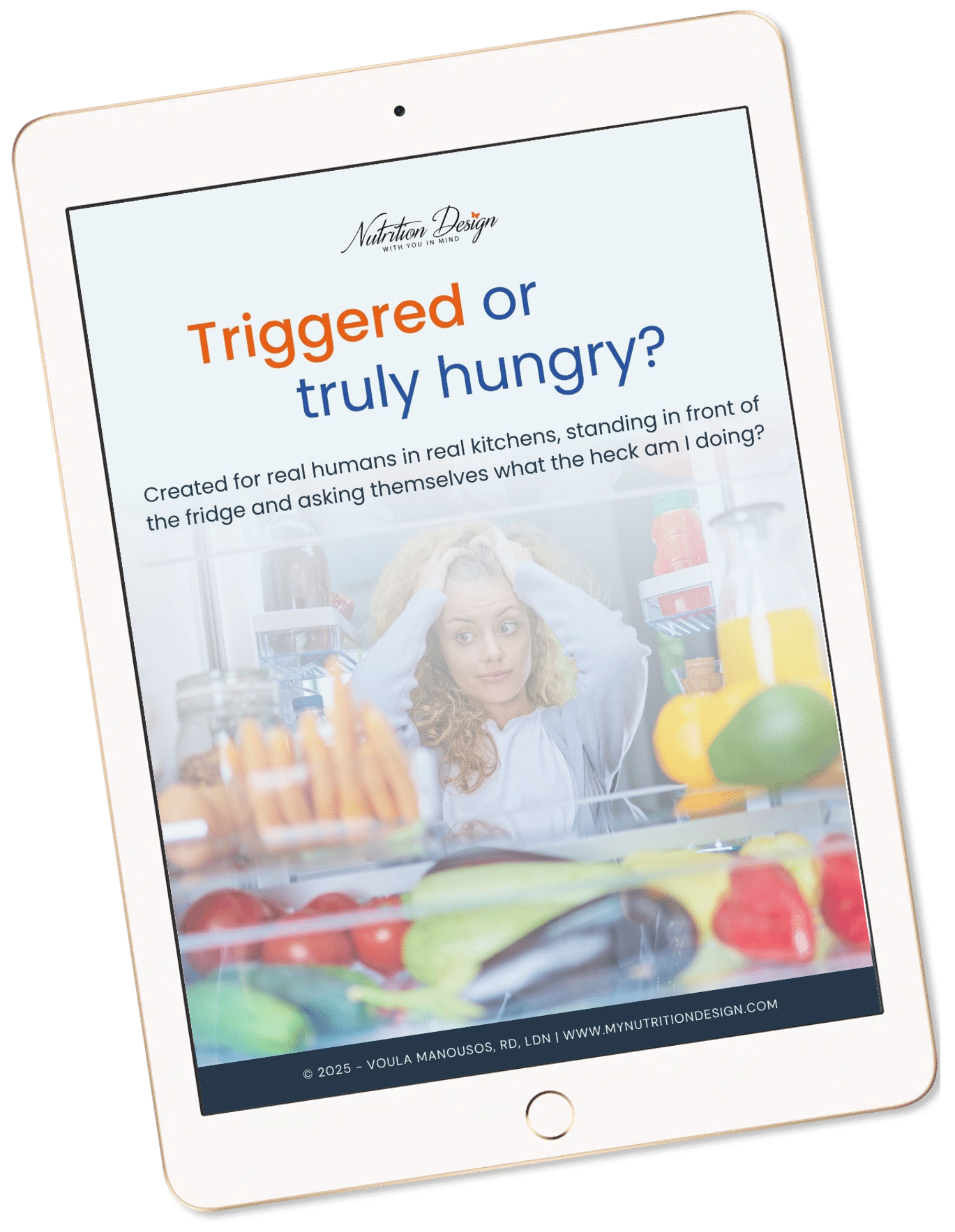
It walks you through practical prompts to help you identify hunger cues, recognize emotional triggers, and respond in a way that supports your long-term health.
Practice Mindful Eating to Interrupt Stress Eating
If stress eating feels automatic, one of the most effective ways to interrupt it is to practice mindful eating. Mindful eating doesn’t mean eating perfectly or meditating over every meal. It means bringing awareness back into your eating behavior so you can make intentional choices instead of reacting on autopilot.
Practically speaking, mindful eating starts with slowing down.
That might mean sitting at a table instead of eating in front of a screen. It might mean taking a few breaths before you begin. Even something as simple as putting your fork down between bites can help you reconnect with your body’s signals.
Slowing down meals allows you to notice hunger and fullness cues more clearly.
Physical hunger usually builds gradually and feels neutral such as a growling stomach, low energy, difficulty concentrating. Emotional eating, on the other hand, often feels urgent and specific, like a strong pull toward a certain food.
When you practice mindful eating, you create space to ask: Am I physically hungry, or am I trying to change how I feel?
Before reaching for food, try taking 30–60 seconds to check in:
- What am I feeling right now?
- Where do I feel it in my body?
- What do I actually need at this moment?
Sometimes the answer will still be food and that’s okay. The goal isn’t to eliminate emotional eating overnight. It’s to bring awareness to your patterns so your eating behavior becomes a conscious choice rather than a stress response.
Over time, practicing mindful eating can reduce stress-driven food intake and help you feel more steady around food. Small pauses may not seem dramatic, but they can significantly change how you respond to stress.
How to Manage Stress So Food Isn’t the Only Coping Tool
If stress eating is a response to tension, then learning to manage stress directly becomes part of the solution.
Food often becomes the default coping tool because it’s fast, accessible, and socially acceptable. But when it’s the only strategy you rely on to relieve stress, it can reinforce patterns you’re trying to change. Expanding your stress-management toolkit gives you more options.

Build Simple, Non-Food Stress Relief Habits
You don’t need elaborate routines to manage stress. Small, consistent actions can calm your nervous system and reduce the intensity of stress-related eating.
Walking.
A short walk can help regulate mood and lower stress hormones. Gentle movement shifts your body out of “fight or flight” and into a more balanced state.
Stretching or yoga.
Slow, intentional movement can reduce muscle tension and support mental health. Yoga, in particular, combines breath and movement, which can help regulate the stress response. I share more about this connection in my article on yoga for weight loss and stress reduction.
Breathing exercises.
Simple breathing techniques like inhaling slowly for four counts and exhaling for six can calm the central nervous system within minutes. When your nervous system settles, cravings driven by chronic stress often feel less urgent.
Social connection.
Talking through stress with a trusted friend or family member can be far more effective than eating in isolation. Human connection supports emotional regulation and reduces the intensity of negative emotions.
Sleep.
Lack of sleep increases stress reactivity and can influence hunger hormones, making it harder to manage food intake. Protecting sleep is one of the most overlooked tools for managing stress and stabilizing eating patterns.
When Professional Support Is Helpful
If chronic stress feels constant, overwhelming, or tied to anxiety or depression, professional support may be appropriate. A licensed therapist or psychologist can help you develop coping strategies that address the root cause of stress rather than relying on food for relief.
Managing stress is not about eliminating it completely. Stress is part of life. The goal is to build enough supportive habits that food no longer feels like the only reliable way to cope.
The more tools you have to handle stress, the less you’ll rely on food to get through it.
Over time, this makes stress eating less automatic and more manageable which supports both your mental health and long-term well-being.

When Stress Eating May Signal an Eating Disorder
Most episodes of stress eating fall into the category of learned coping patterns. They’re frustrating, but they’re usually tied to stress, habits, or emotional triggers.
However, there are times when eating behavior moves beyond occasional stress-related eating and may signal something more serious.
Eating disorders are diagnosable mental health conditions.
They are not “bad habits,” and they are not caused by a lack of discipline. Conditions such as binge eating disorder, bulimia nervosa, and anorexia nervosa involve persistent disruptions in eating patterns along with significant emotional distress and impairment.
It’s important to recognize when stress eating crosses into territory that requires specialized care.
Warning Signs to Pay Attention To
While only a qualified medical or mental health professional can diagnose an eating disorder, some warning signs include:
- Eating in secrecy or hiding food
- Frequent binge eating episodes that feel out of control
- Purging behaviors (vomiting, laxatives, excessive exercise)
- Obsessive restriction or rigid food rules
- Intense guilt, shame, or anxiety around eating
- Feeling consumed by thoughts about food or body weight
Binge eating disorder, for example, involves recurring episodes of eating large amounts of food in a short period of time along with a sense of loss of control. Unlike stress eating, binge eating episodes are typically more intense, more frequent, and associated with significant distress.
If eating patterns feel overwhelming, secretive, or compulsive or if food feels like it’s dominating your thoughts, that’s a sign to seek professional support.
When to Seek Help
If you’re concerned about eating disorders or binge eating, I strongly encourage reaching out to your primary care provider, a licensed therapist, psychologist, or psychiatrist. Early support can make a meaningful difference.
You can also find confidential resources and information through the National Alliance for Eating Disorders or the National Eating Disorders Association (NEDA).
Getting help is not a failure. It’s a responsible step toward protecting both your physical and mental health.
Stress eating is common. Eating disorders are medical and psychological conditions that deserve specialized care. Knowing the difference helps ensure you get the right kind of support.

A Simple Framework to Break Stress-Related Eating Patterns
Changing stress-related eating doesn’t require a complete overhaul of your life. In many cases, it starts with a simple pause and a repeatable process you can use in real time.
Here’s a practical four-step framework you can come back to whenever the urge to eat feels tied to stress rather than physical hunger.
1. Notice the Trigger
Start by identifying what just happened.
Did you get a stressful email? Have a tense conversation? Feel overwhelmed by your to-do list? Bored or lonely?
Stress-related eating usually follows a trigger. The first step is noticing it. When you can say, “That urge started after that meeting,” you begin to separate the emotion from the automatic response.
2. Name the Emotion
Once you’ve identified the trigger, ask yourself what you’re feeling.
Is it anger? Frustration? Anxiety? Sadness? Disappointment? Excitement?
Putting words to emotions helps regulate them. Research in psychology shows that labeling emotions can reduce their intensity. When you name what you’re feeling, you shift from reacting to observing.
3. Assess Your Hunger
Next, check in with your body.
Are you experiencing physical hunger cues such as stomach growling, low energy, or difficulty concentrating? When was your last balanced meal?
If you are physically hungry, eating is the appropriate response. The goal isn’t to override hunger. It’s to distinguish between hunger and emotional triggers.
4. Choose a Supportive Response
Once you’ve identified the trigger, named the emotion, and assessed hunger, decide what would help.
If you’re hungry, eat a balanced meal or snack.
If you’re stressed but not physically hungry, consider a different response:
- Take a short walk
- Step outside for fresh air
- Call a friend
- Try a brief breathing exercise
- Write down what’s bothering you
If you struggle to tell whether you’re triggered or truly hungry, I created a free guide to help you walk through this process step by step:
Download “Triggered or Truly Hungry?” here >
The more you practice this framework, the more natural it becomes. Stress eating patterns are changed through awareness and repetition.
Not Sure If It’s Stress or Hunger?
If you’ve ever stood in the kitchen wondering, “Am I actually hungry… or just stressed?” you’re not alone.
Many emotional eaters genuinely can’t tell the difference at first.
Hunger and stress can feel similar in the moment. Both can create urgency. Both can create strong cravings. And when you’re tired or overwhelmed, it becomes even harder to pause and sort it out.
Stress can blur your internal cues.
Skipping meals, poor sleep, and chronic stress can all make it more difficult to recognize true physical hunger. Over time, your eating patterns may become more reactive and less intentional because your body and brain are responding to pressure.
This is exactly why I created a free resource to help you.
Download “Triggered or Truly Hungry?”
My free guide, “Triggered or Truly Hungry?”, walks you through a practical step-by-step process to help you:
- Identify physical hunger cues
- Recognize emotional triggers
- Pause before reacting automatically
- Respond in a way that supports healthier eating habits
It’s designed for anyone who feels stuck in the cycle of stress eating and wants more clarity without dieting, restriction, or guilt.
If you’d like a simple tool to help you feel more steady and confident around food, you can download it here.
Learning to tell the difference between stress and true hunger is one of the most powerful skills you can build for long-term, sustainable change.
Final Thoughts on Stress Eating
Stress eating is common. It’s not a character flaw, and it’s not a sign that you lack discipline.
It’s a learned response to pressure, fatigue, and emotional overload. When your body and brain are under stress, they look for relief. Food is fast, familiar, and effective in the short term. That doesn’t make you weak. It makes you human.
Real change begins when you start noticing your patterns without judgment. When you can pause, identify a trigger, check your hunger, and choose a supportive response, you shift from reacting automatically to responding intentionally.
You don’t have to eliminate stress to change stress eating. You just need a few shifts:
- More consistent eating habits
- Fewer extremes or rigid rules
- Better stress management tools
- More awareness of emotional triggers
Over time, those small changes add up. Eating patterns that once felt automatic can become more balanced and intentional.
If you’re working on this on your own, the free guide “Triggered or Truly Hungry?” is a helpful starting point. It gives you a practical framework to build awareness and respond differently in the moment.
If you feel stuck or want more individualized support, working with me one-on-one can help you look deeper at your eating habits, stress patterns, and lifestyle factors in a way that’s tailored specifically to you. Contact me here to schedule a consultation and see if we’re a good fit to work together.
Stress eating isn’t who you are. With the right support, food doesn’t have to feel so complicated.